Supply analysis
Section outline
-
-
Can geothermal probes be installed at our site?
Tool: GIS-Browser
Like many typical Swiss buildings from the 1970s, the multi-family residential building in Schwamendingen is still heated with fuel oil, a non-renewable energy source. Burning fuel oil produces large amounts of CO₂ and other pollutants; in addition, oil heating systems have very low efficiency.
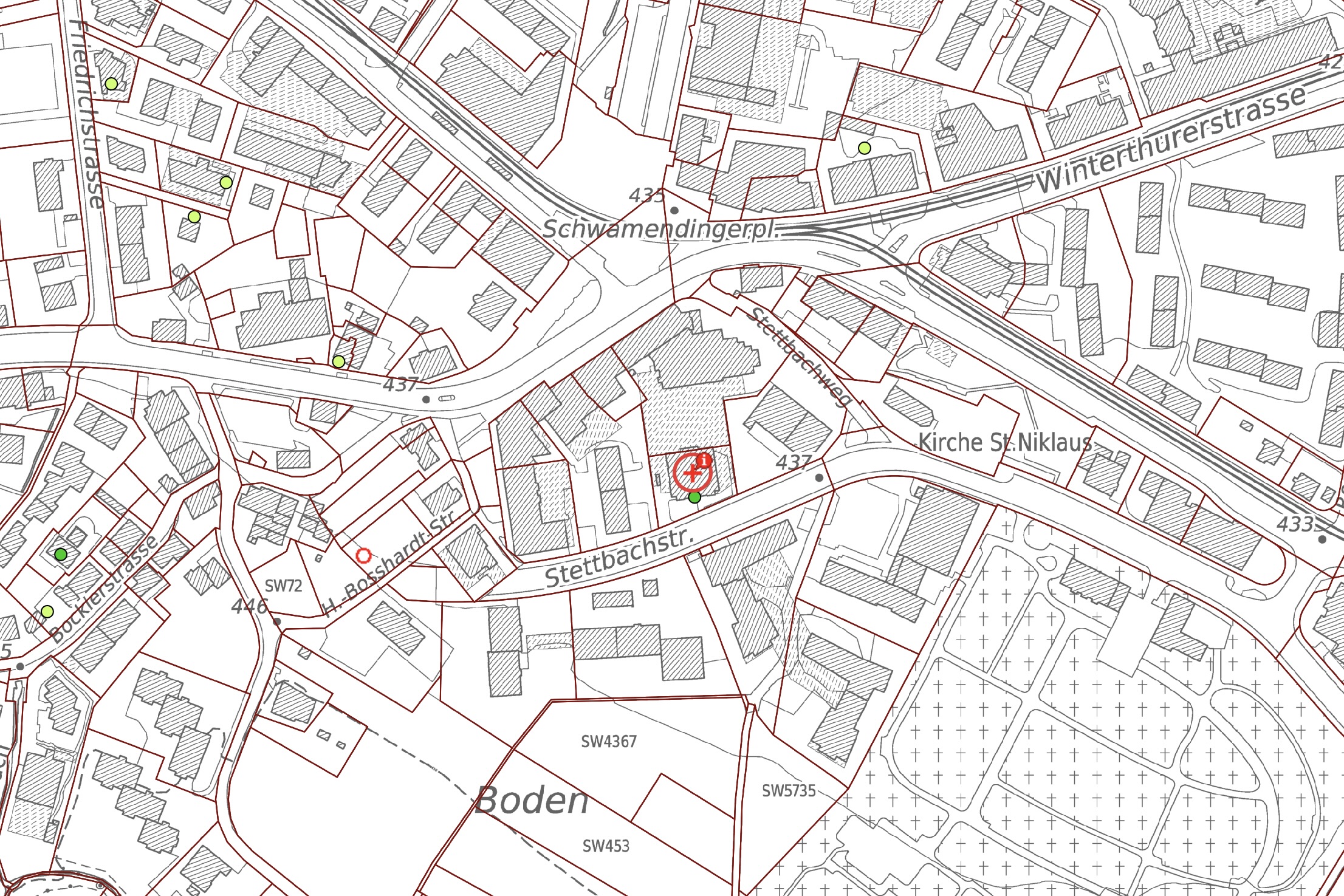
As part of an energy-efficient renovation, it is therefore necessary to examine which alternative energy sources are suitable for the building. This requires an initial analysis of the local conditions. Using the available tools, it is possible to determine which sustainable energy sources can be utilized at the site at Stettbachstrasse 43, 8051 Zurich.
-

-
This map shows that, at the location of the Schwamendingen multi-family residential building, the installation of geothermal probes with a borehole profile is possible. Source: GIS browser, Canton of Zurich.
-
Using the GIS browser of the Canton of Zurich, it can be clearly seen that groundwater utilization for heat generation is not possible at this location. This is due to the hydrogeological conditions of the subsurface.
However, the map shows good suitability for geothermal probes with a borehole profile. The permissible probe depth is up to 234 meters.
On this basis, a brine-to-water heat pump is used, which operates with four geothermal probes, each with a depth of approximately 234 meters. This system efficiently harnesses the heat stored in the ground and represents a sustainable alternative to the existing oil heating system.
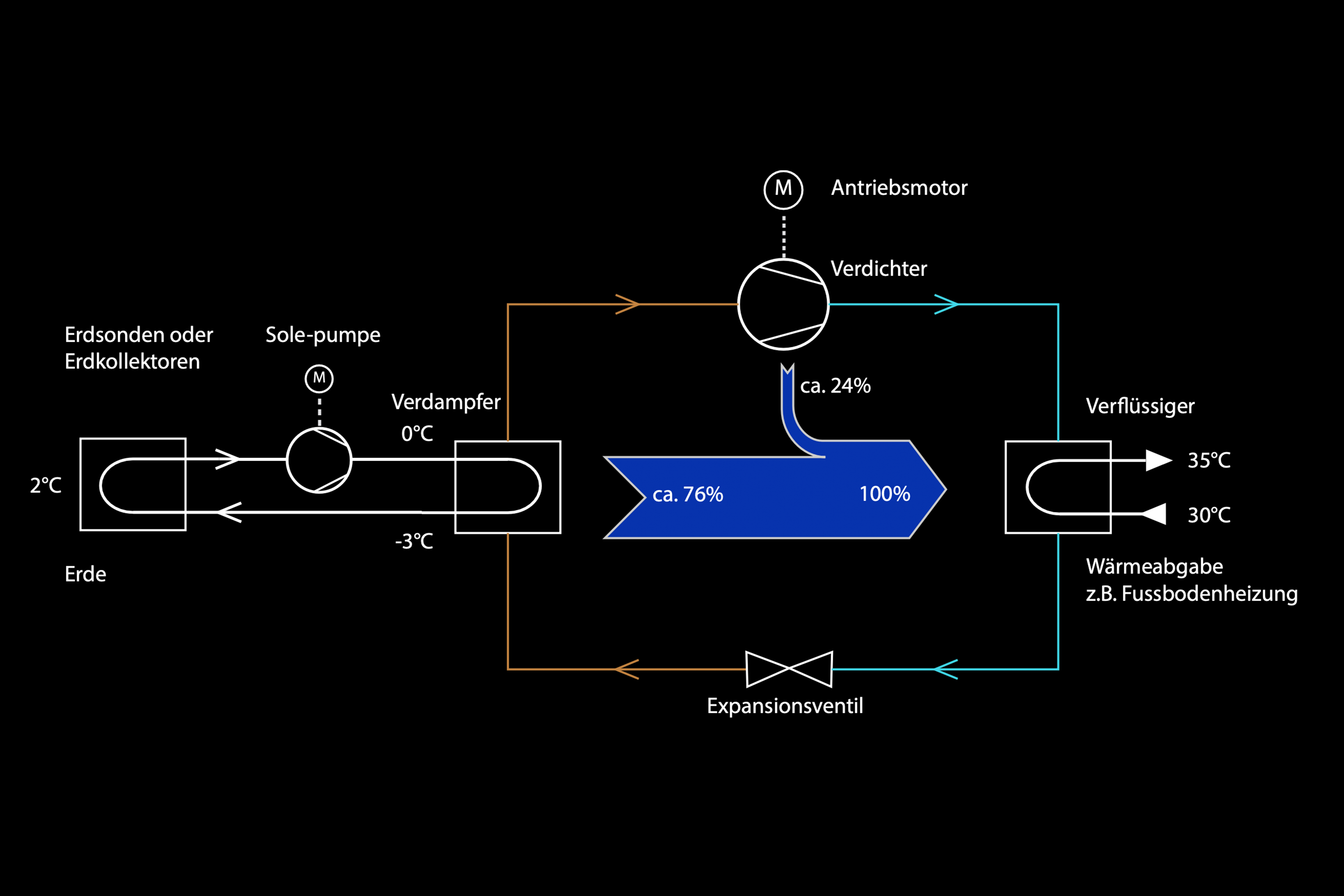
A brine-to-water heat pump extracts thermal energy from the ground via geothermal probes or ground collectors. A brine—namely a water–glycol mixture—transports this heat to the heat pump. There, a refrigerant evaporates in the evaporator, is then compressed in the compressor, and thereby brought to a higher temperature level. In the condenser, the refrigerant releases the extracted heat to the heating system, for example to underfloor heating, before the cycle restarts via the expansion valve.
Geothermal probes offer several advantages over ground collectors: they achieve higher efficiency, require less space, and utilize stable ground temperatures. Ground collectors are less expensive but require a large surface area. In this case, geothermal probes are the more suitable solution.
-

-
This diagram illustrates the operating principle of a brine-to-water heat pump. Source: Bonin, Heat Pump Handbook, Beuth, 2012.
-
An air-to-water heat pump would in principle also be possible. Compared to this option, however, the brine-to-water heat pump is characterized by higher efficiency, quieter operation, and more stable performance in winter, even though it involves higher investment costs and is not permitted everywhere. Since the use of a brine-to-water heat pump with geothermal probes is allowed at our site, this option was selected. For heat distribution, underfloor heating with a supply temperature of 35 °C is used instead of radiators operating at 60 °C, which results in a higher coefficient of performance (COP).
-
Can the sun also be used as an energy source?
Tool: Geo-Admin, Sonnendach/Sonnenfassade, Solarrechner EnergieSchweiz
Although the ground represents a reliable energy source, it should not remain the only local energy source. The sun also offers enormous potential, as it is unlimited and renewable. By combining geothermal energy and solar energy, the building can achieve even higher energy efficiency and a greater degree of self-sufficiency.
With the help of the digital tools Solar Roof and Solar Façade, which are accessible via Geo-Admin and linked to the EnergySchweiz solar calculator, the solar potential of a building can be analyzed with high precision.
These tools indicate which roof or façade areas are particularly suitable for the installation of photovoltaic or solar thermal systems, based on orientation, inclination, and shading.
-
-
Analysis of solar potential. Source: Geo-Admin, EnergySchweiz solar calculator.
-
The results of the analysis tools are extremely positive. Since the Schwamendingen multi-family residential building has a flat roof and is located in an environment with no significant shading, it is ideally suited for the installation of photovoltaic modules.
According to the calculations of the EnergySchweiz solar calculator, the roof could generate approximately 62,660 kWh of electricity per year. The self-consumption rate is 29%, which describes the share of self-generated electricity that is used directly within the building rather than fed into the public grid. By using a battery storage system, surplus solar electricity can be stored and used later, increasing self-consumption and reducing grid electricity demand. According to the EnergySchweiz solar calculator, self-consumption can be increased to up to 44.4% with a 62.5 kWh battery.
The total annual electricity demand of the multi-family residential building amounts to 63,696 kWh. With the installed PV system, this demand can be covered almost entirely for large parts of the year, especially during the warmer months. Only in the winter months—due to seasonal fluctuations in solar irradiation—does a small portion still need to be supplied by the public grid.
The solar façade also shows promising potential: the south-facing façade of the building is very well suited for solar energy use, and the west-facing façade can also be utilized. Since the roof already covers most of the electricity demand, the façade modules could be meaningfully used for solar thermal energy to support the building’s heat demand. This is particularly advantageous in winter, when heating demand increases significantly and the sun is lower in the sky. During this season, solar heat gains from the façade can make a substantial contribution.
The façade-mounted solar collectors achieve a high solar coverage ratio of 74.5% for domestic hot water and space heating, further highlighting the efficiency of this solution.

-

-
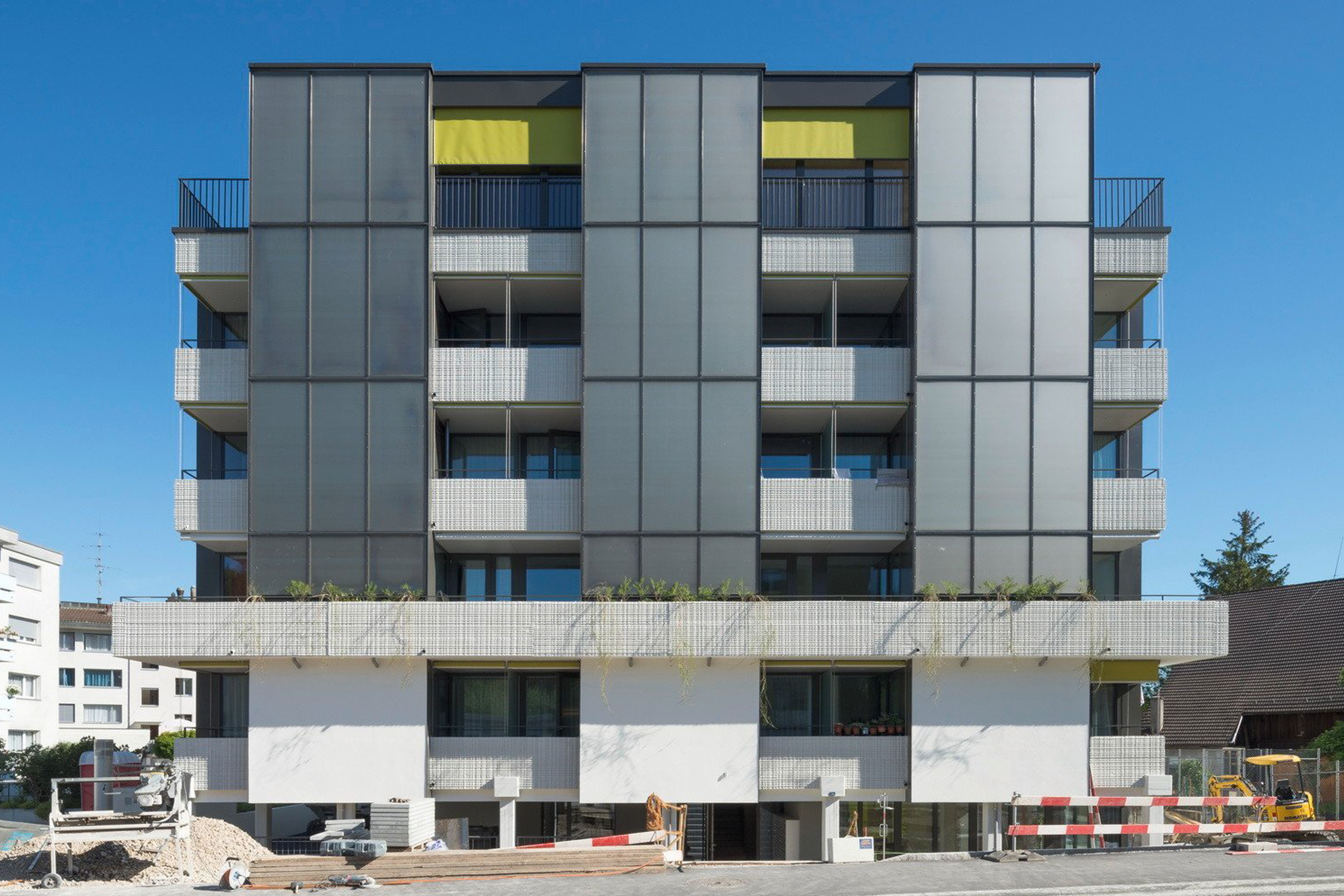
Facade with solar collectors. Photo: Kämpfen Zinke + Partner AG
-
A solution that is not only functional but also aesthetically convincing was developed for the façade renovation with solar collectors. The areas between the balconies and loggias on the east, south, and west façades were equipped with a total of 180 square meters of solar thermal collectors starting from the first upper floor. By distributing the collectors across three sides of the building, the energy yield remains relatively constant throughout the year, significantly increasing the efficiency of the system.
The solar collectors are fitted with innovative glass in a light, bronze-toned shimmering finish, developed in collaboration with ETH Lausanne (EPFL). Depending on the time of day and weather conditions, the color effect of the surface changes, giving the building envelope a lively and distinctive appearance.
The wall surfaces without solar panels were designed with climbing aids for climbing plants. These green façades protect the exterior walls from excessive solar radiation and at the same time contribute to the improvement of the microclimate.
-
How is the energy stored?
To increase the self-consumption of the self-generated solar electricity, the photovoltaic system is combined with a battery storage system. This makes it possible to store surplus energy and retrieve it when needed, so that the building has to draw less electricity from the grid.
In addition to electrical storage, the question also arises as to whether the heat generated by the brine-to-water heat pump and the solar thermal system can be stored efficiently. The answer is yes – and in a particularly innovative way.
-

-
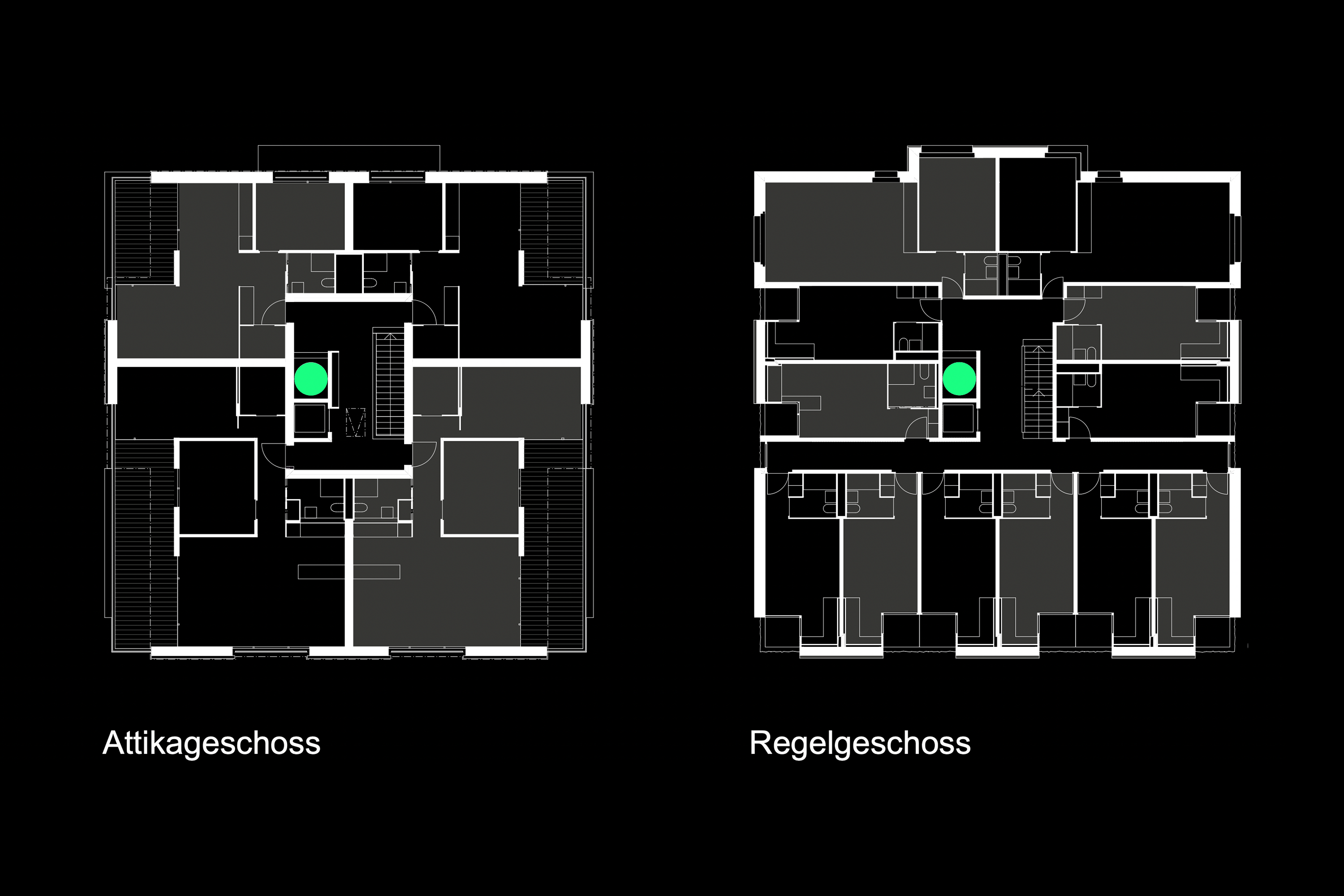
Location of the thermal storage unit. Plans: Kämpfen Zinke + Partner AG
-
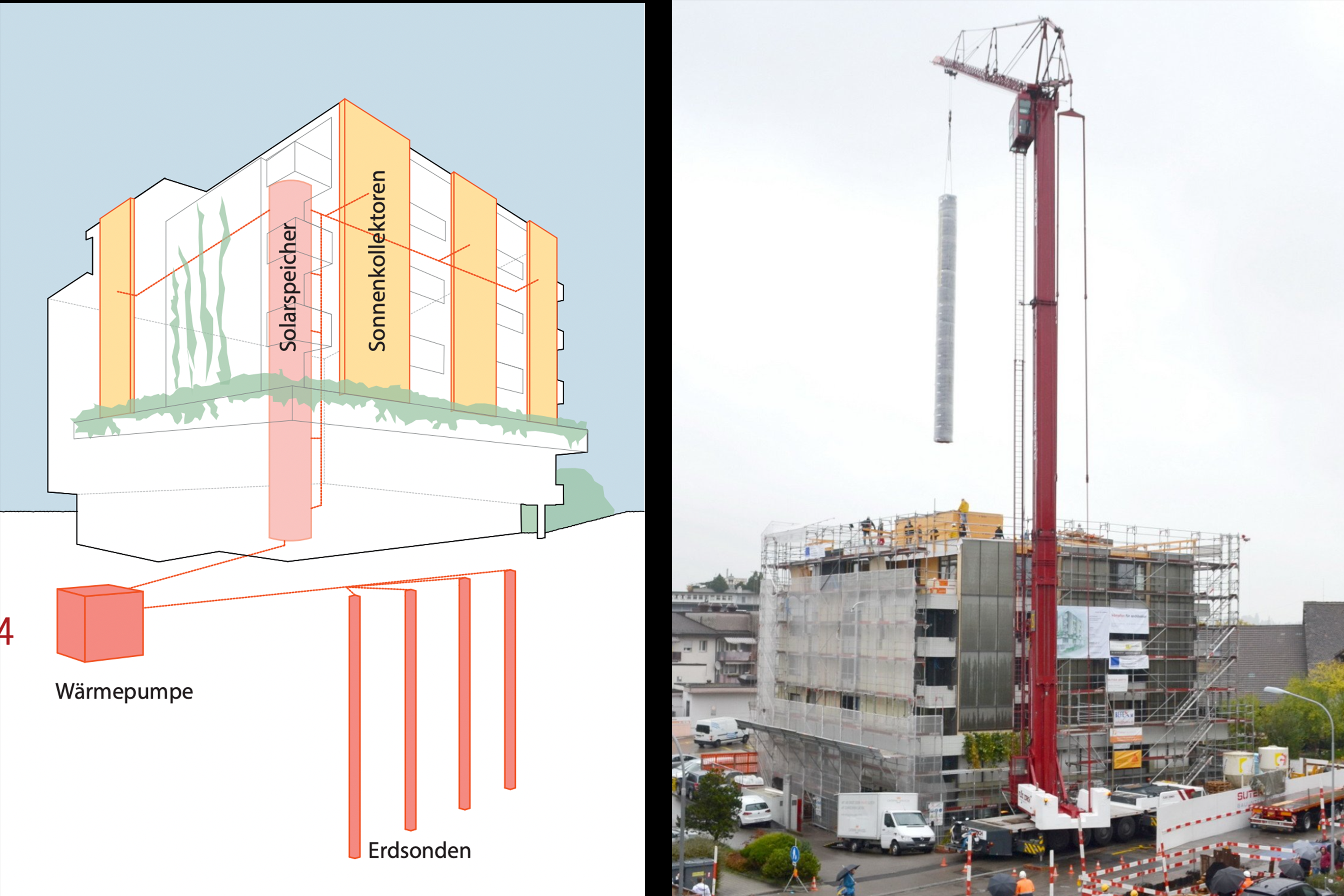
Inside the building, a structural advantage emerged that had not originally been planned: a centrally located exhaust air shaft that had served to ventilate the underground parking garage could be repurposed after a technical modification. Instead of its former function, the shaft now accommodates a 19-meter-high thermal storage tank with a volume of approximately 19,000 liters.
This thermal storage system makes it possible to temporarily store surplus thermal energy and make it available during periods of low solar irradiation or unfavorable weather conditions. In this way, a continuous heat supply is ensured even when no direct solar energy is available.
In addition, excess heat can be transferred into the ground via four deep geothermal probes, which serve as a natural seasonal thermal storage system. The combination of battery storage, thermal storage, and geothermal probes creates a highly efficient energy system that is convincing both ecologically and technically.
-

-
Left: Schematic illustration of the interaction between solar storage, solar collectors, and heat pump. Source: Deutsche Bauzeitung, 2019
Right: On-site installation of the solar storage system. Photo: Kämpfen Zinke + Partner AG -
Is a mechanical ventilation system necessary?
After optimizing the systems for electricity and heat supply, the question now arises as to whether the ventilation system should also be improved. In principle, it would be possible to supply the entire building exclusively through natural ventilation; however, the associated heat losses are considerable.
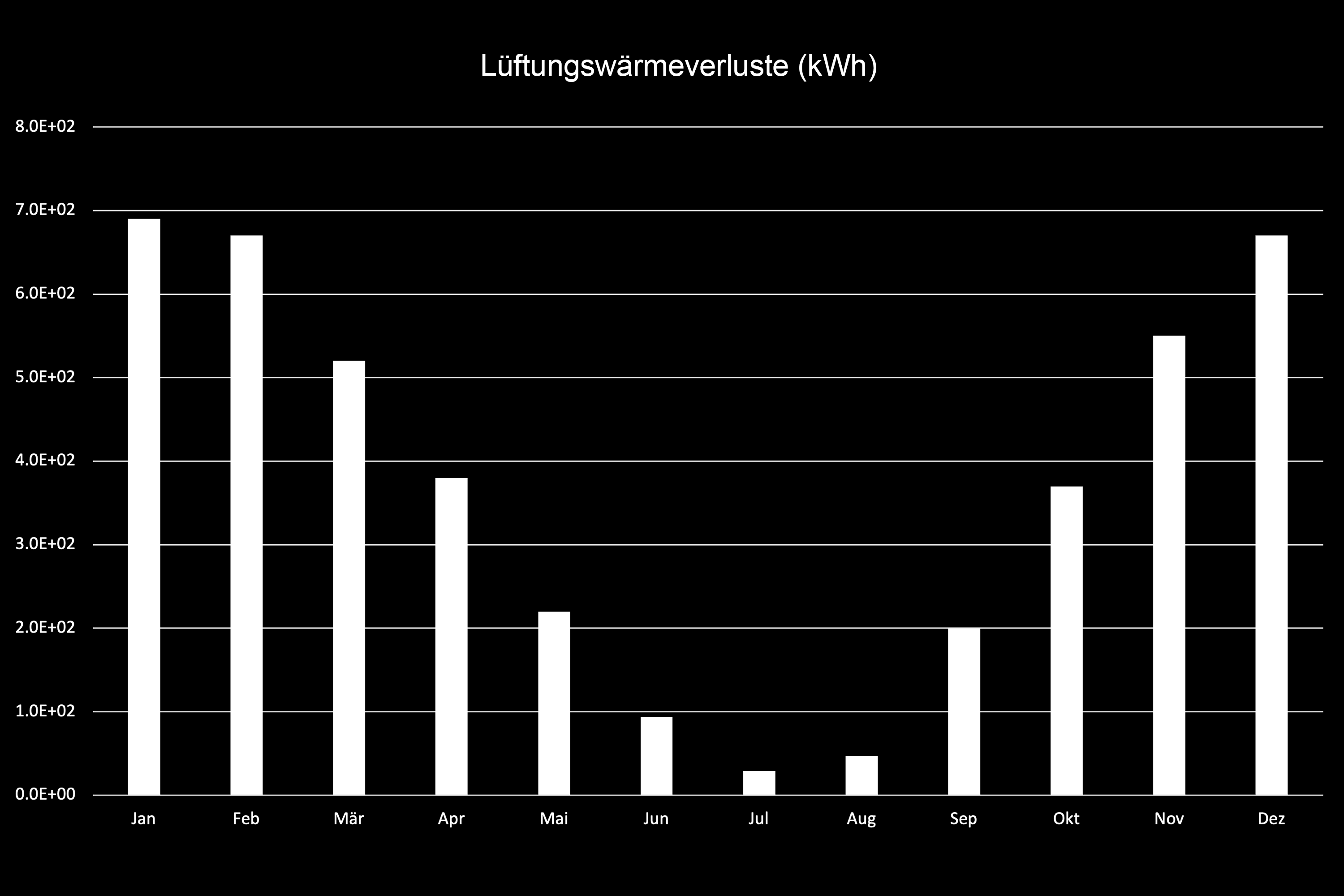
As shown in the diagram below, annual ventilation losses of up to 4,400 kWh occur in the Schwamendingen multi-family residential building due to natural ventilation. These losses are significantly higher in winter in particular, as the temperature difference between indoor and outdoor air is pronounced. This has a negative impact on energy consumption and the thermal comfort of the occupants and represents a critical issue during the cold season.
In addition, all bathrooms in the building have no windows and therefore cannot be naturally ventilated. For these reasons, a mechanical ventilation system is indispensable.
-

-
Diagram of ventilation heat losses due to natural ventilationg.
-
For these reasons, a mechanical ventilation system with heat recovery is recommended. Such a system is therefore installed in the Schwamendingen multi-family residential building.
A ventilation system with heat recovery uses the heat from the extracted indoor air to preheat the incoming fresh air. Both air streams pass through a heat exchanger without mixing; only thermal energy is transferred. In this way, preheated fresh air enters the building while the used air is discharged to the outside.
This system significantly reduces heating energy losses while simultaneously ensuring a comfortable and healthy indoor climate. Especially in winter, when sufficient natural ventilation is difficult, mechanical ventilation with heat recovery makes a decisive contribution to energy efficiency and indoor air quality.
-
System chain and section diagram
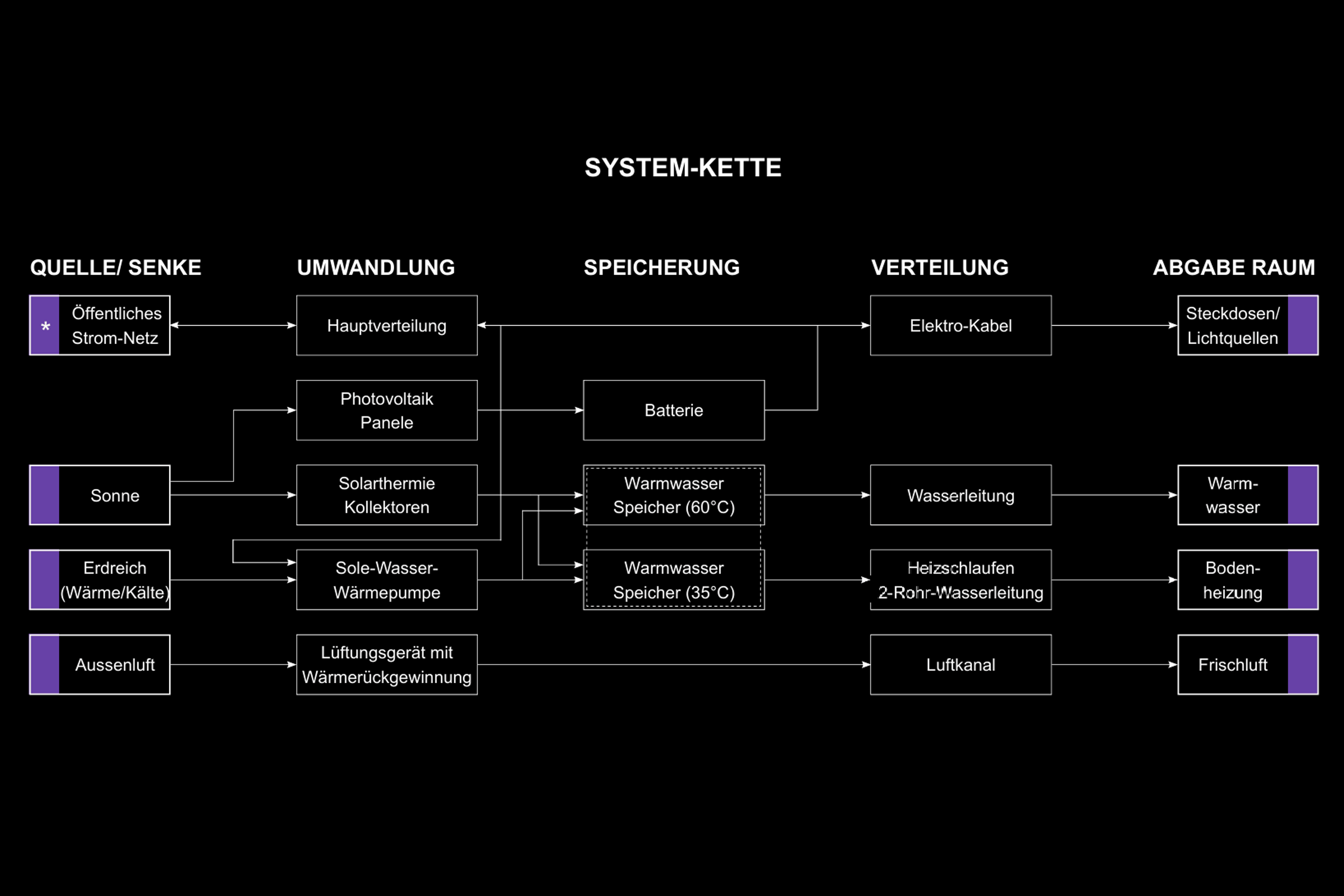
In summary, the renovation of the Schwamendingen multi-family residential building comprises various building systems that together form an integrated energy concept.
To meet electricity demand, photovoltaic modules are installed on the roof. In the event of seasonal fluctuations, additional electricity is drawn from the public grid. A battery storage system increases the share of self-consumption and optimizes the use of energy generated on site.
For space heating, a brine-to-water heat pump replaces the former oil heating system. This system can also be used for cooling when required. In addition, the solar thermal system on the façade provides supplementary thermal energy, while a large water storage tank temporarily stores the harvested energy and makes it available when needed.
For building ventilation, a mechanical ventilation system with heat recovery is installed alongside natural ventilation. This ensures a continuous supply of fresh air while simultaneously reducing heat losses.
Overall, this results in an efficiently interconnected energy system that optimally combines electricity, heating, cooling, and ventilation, thereby reducing the building’s energy consumption in the long term.
-

-
System chain of the Schwamendingen multi-family residential building, source: A/S
-
-
Section diagram of the Schwamendingen multi-family residential building: electricity, heat, ventilation, and all system.
-
Conclusion: From source to space
The Schwamendingen multi-family residential building demonstrates that sustainable building technology is far more than the mere combination of individual systems. It emerges from the interaction of energy sources, architecture, and technology.
The integration of sun, ground, air, and digital tools such as the GIS browser, Geo-Admin, and the solar calculator makes visible how data and design merge into an intelligent and efficient system. The system chain and the section diagram illustrate in a clear and accessible way how energy flows within the building interlock from the source to their use within the space.
Above all, however, this project reminds us that future-oriented architecture begins with the design of the systems themselves—in the balance between function, form, and environment. It invites us to understand buildings as living actors that do not merely consume energy, but shape it, store it, and pass it on.
-
Do you have any questions or comments?
If you have any questions about the heat demand analysis or the MFH Schwamendingen project, or if you would like to share your own experiences and thoughts on thermal simulation, refurbishment measures or the use of tools such as Ubakus, please feel free to join the discussion in the forum.
-