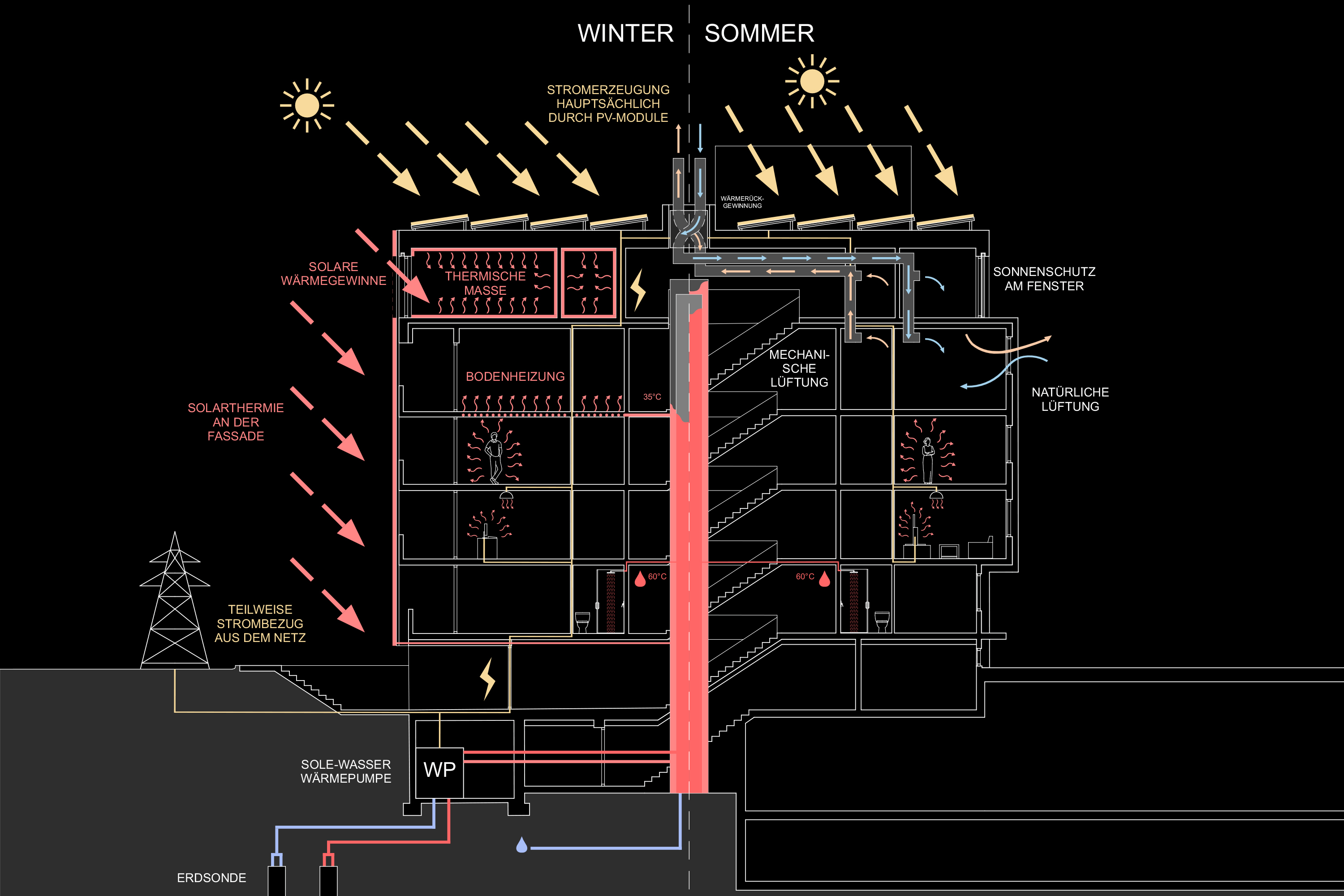
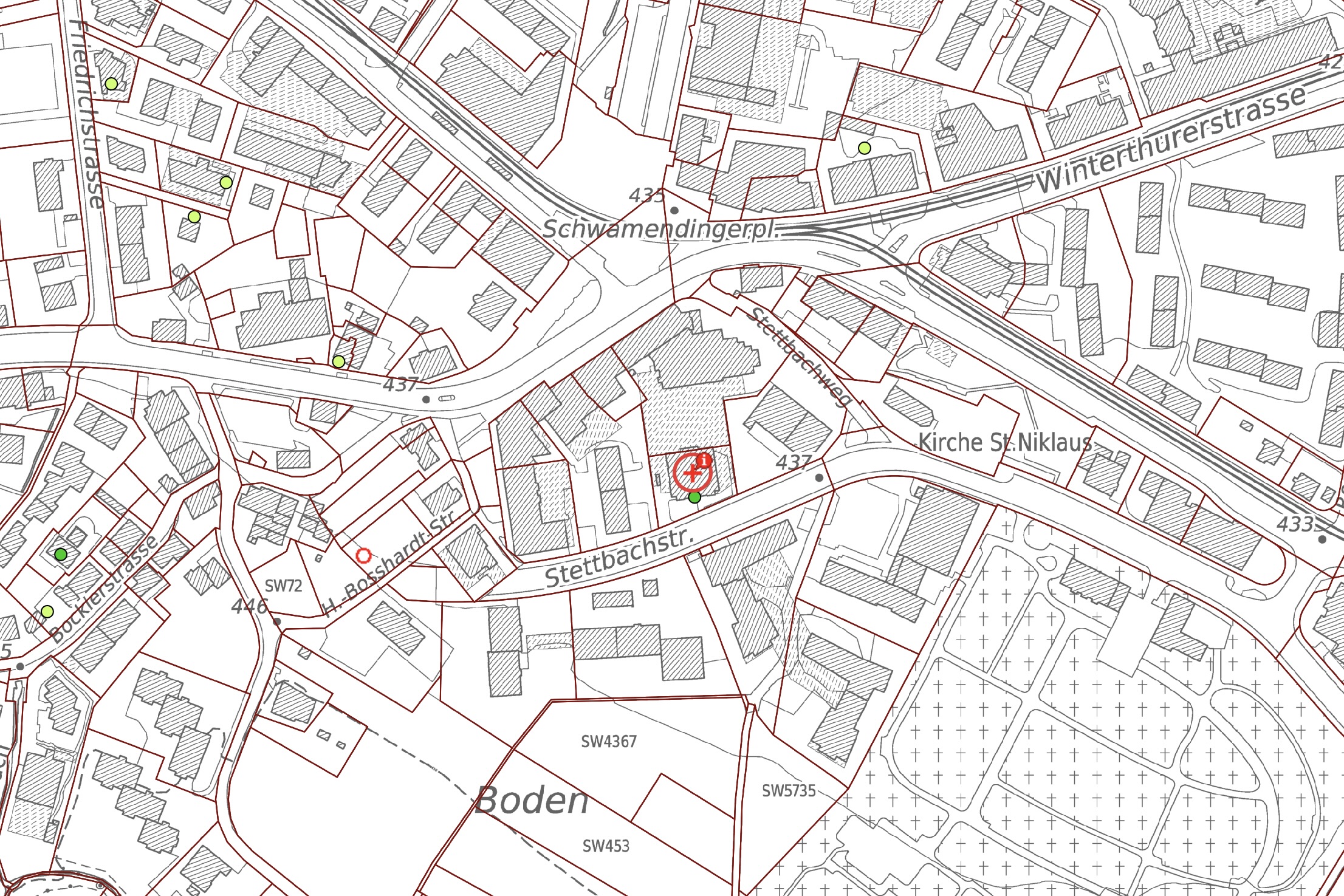
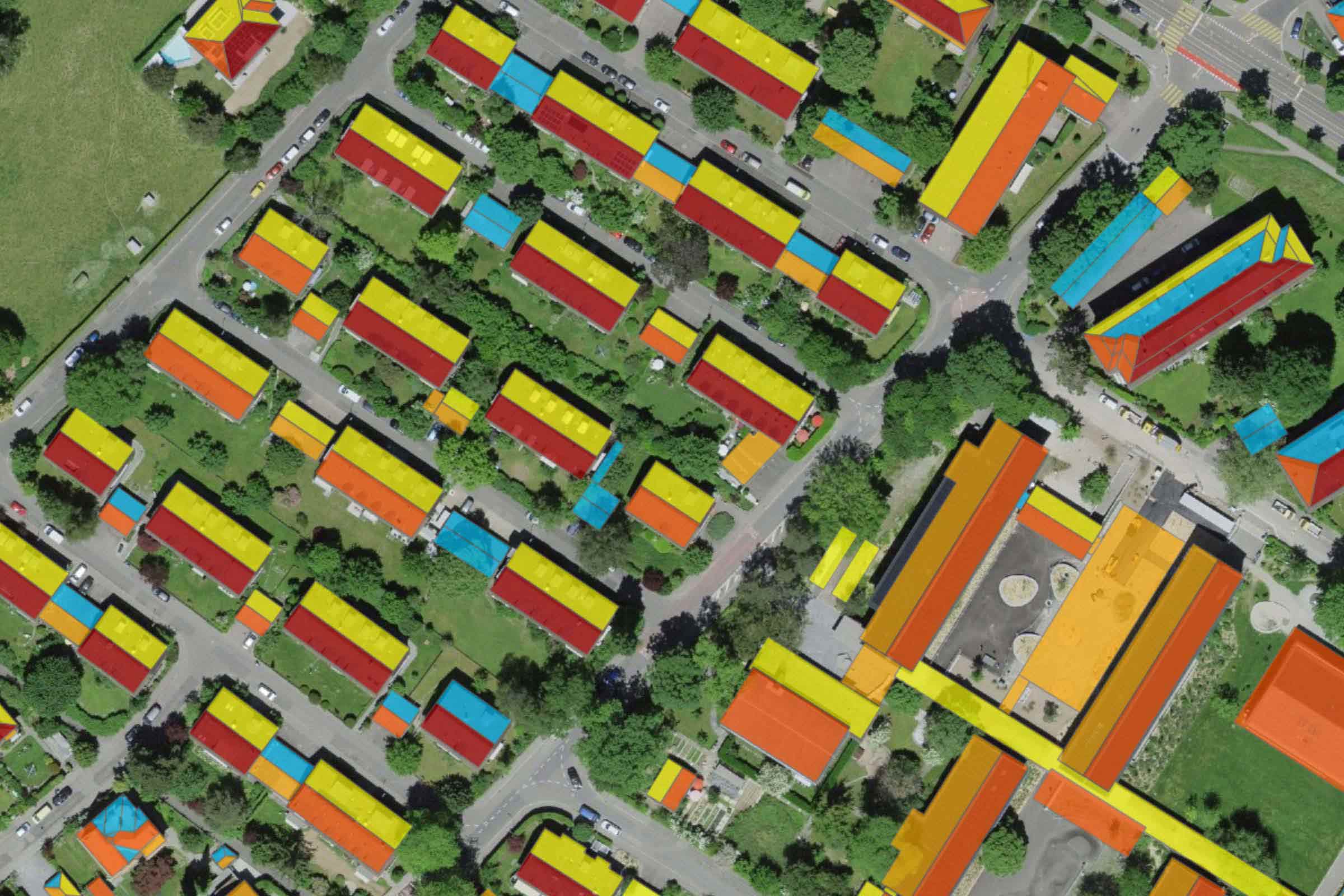
The results of the analysis tools are extremely positive. Since the Schwamendingen multi-family residential building has a flat roof and is located in an environment with no significant shading, it is ideally suited for the installation of photovoltaic modules.
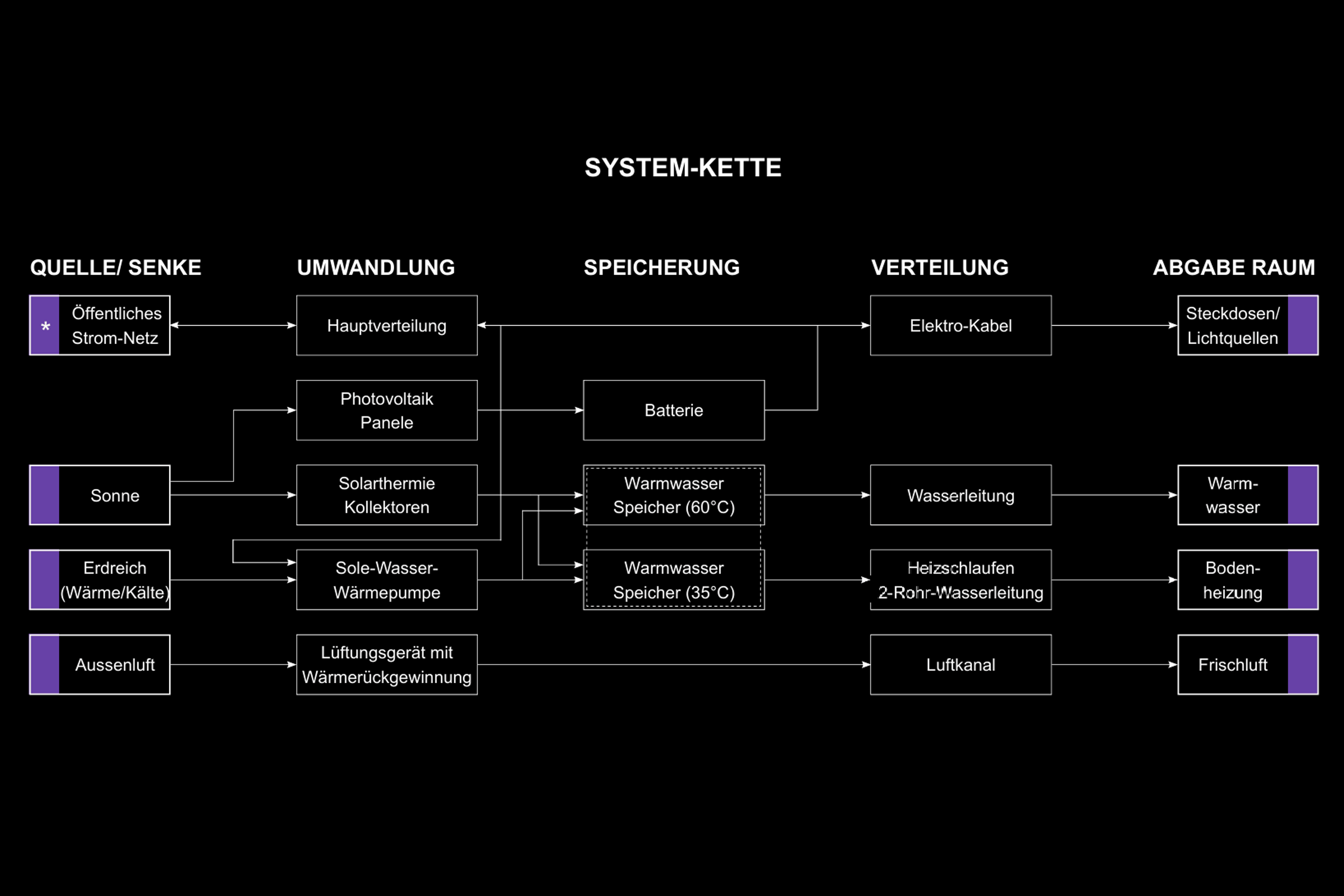
According to the calculations of the EnergySchweiz solar calculator, the roof could generate approximately 62,660 kWh of electricity per year. The self-consumption rate is 29%, which describes the share of self-generated electricity that is used directly within the building rather than fed into the public grid. By using a battery storage system, surplus solar electricity can be stored and used later, increasing self-consumption and reducing grid electricity demand. According to the EnergySchweiz solar calculator, self-consumption can be increased to up to 44.4% with a 62.5 kWh battery.
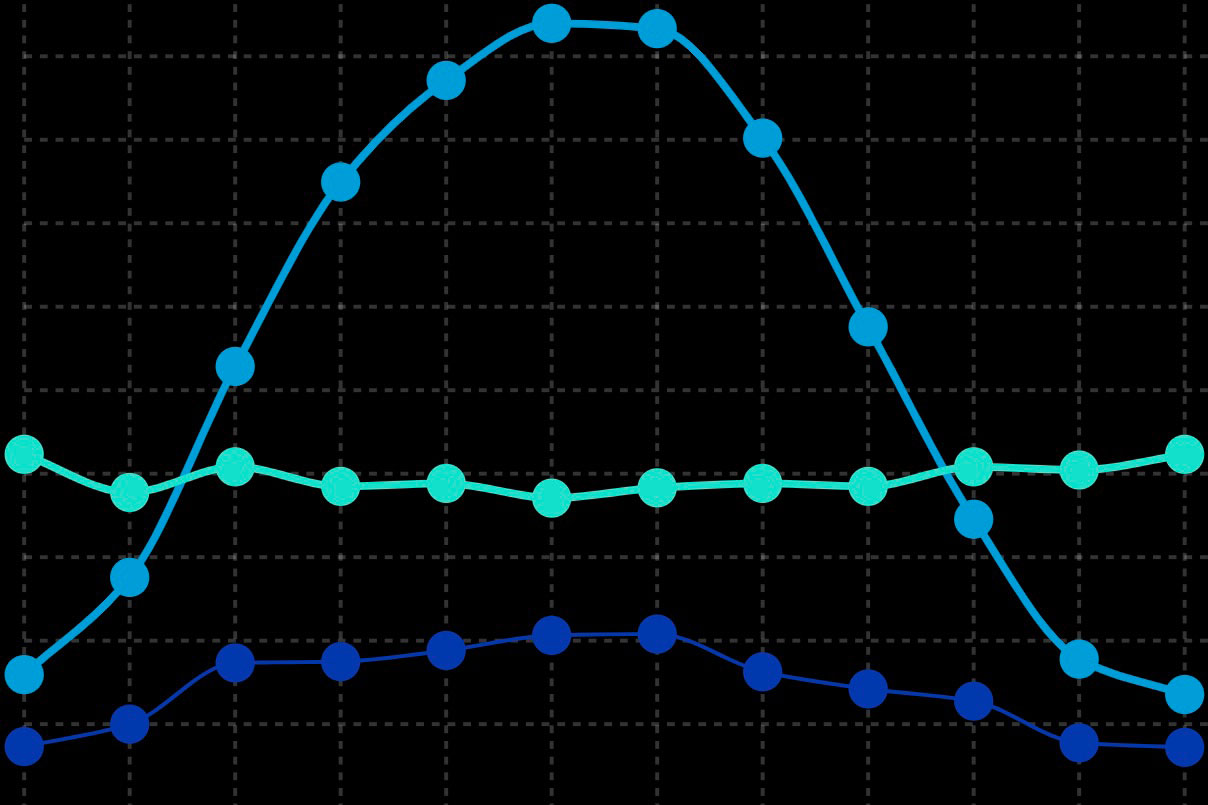
The total annual electricity demand of the multi-family residential building amounts to 63,696 kWh. With the installed PV system, this demand can be covered almost entirely for large parts of the year, especially during the warmer months. Only in the winter months—due to seasonal fluctuations in solar irradiation—does a small portion still need to be supplied by the public grid.
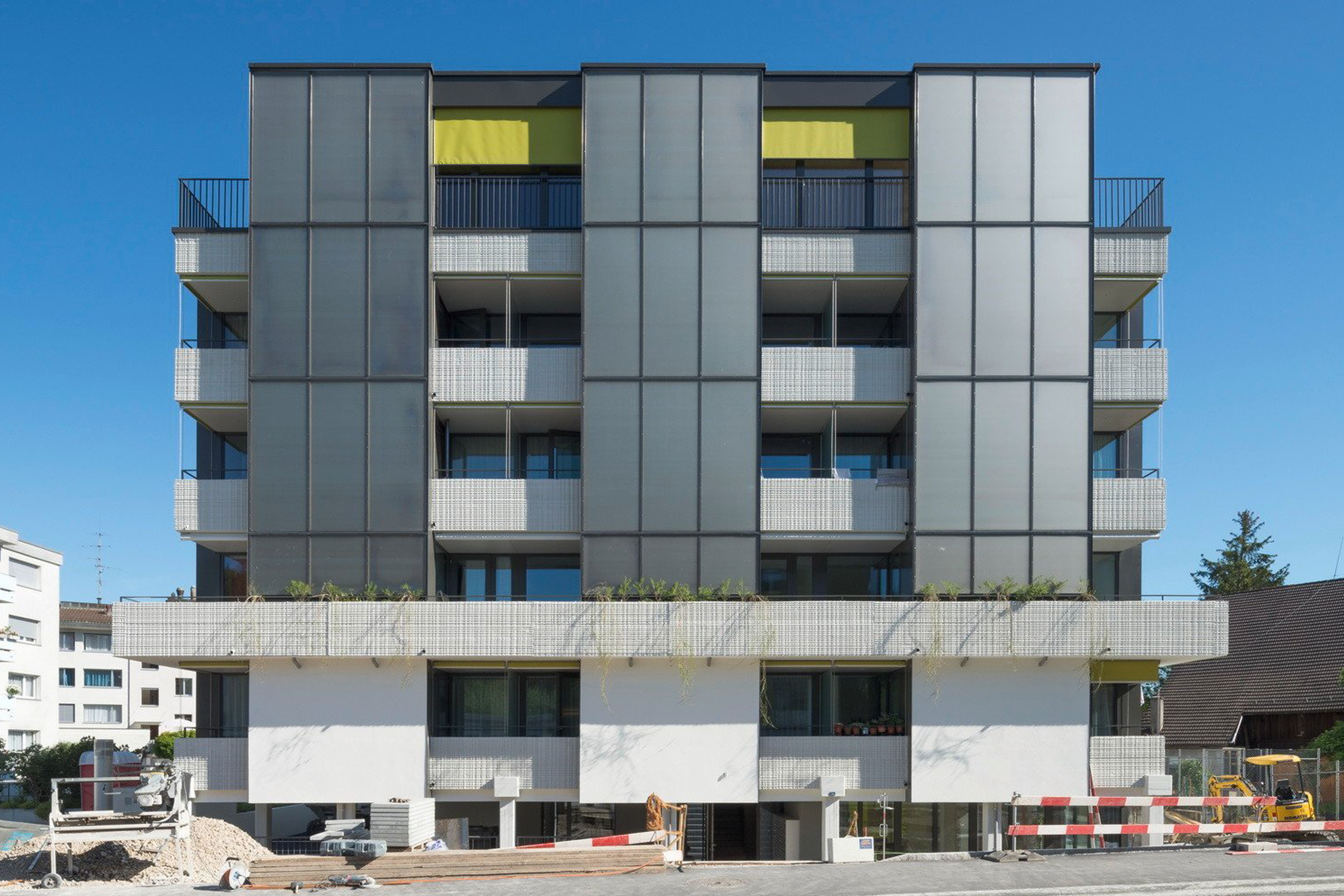
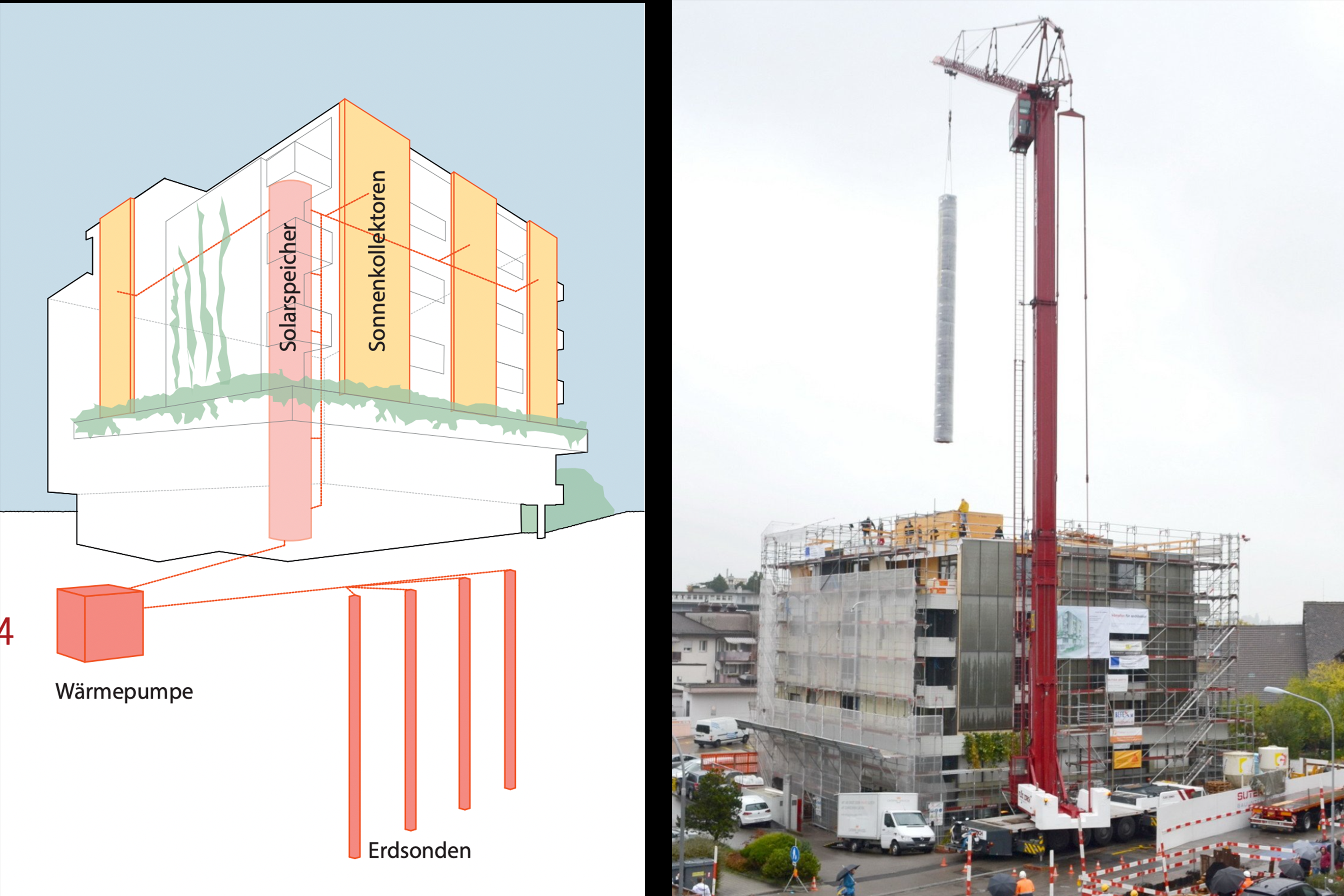
The solar façade also shows promising potential: the south-facing façade of the building is very well suited for solar energy use, and the west-facing façade can also be utilized. Since the roof already covers most of the electricity demand, the façade modules could be meaningfully used for solar thermal energy to support the building’s heat demand. This is particularly advantageous in winter, when heating demand increases significantly and the sun is lower in the sky. During this season, solar heat gains from the façade can make a substantial contribution.
The façade-mounted solar collectors achieve a high solar coverage ratio of 74.5% for domestic hot water and space heating, further highlighting the efficiency of this solution.